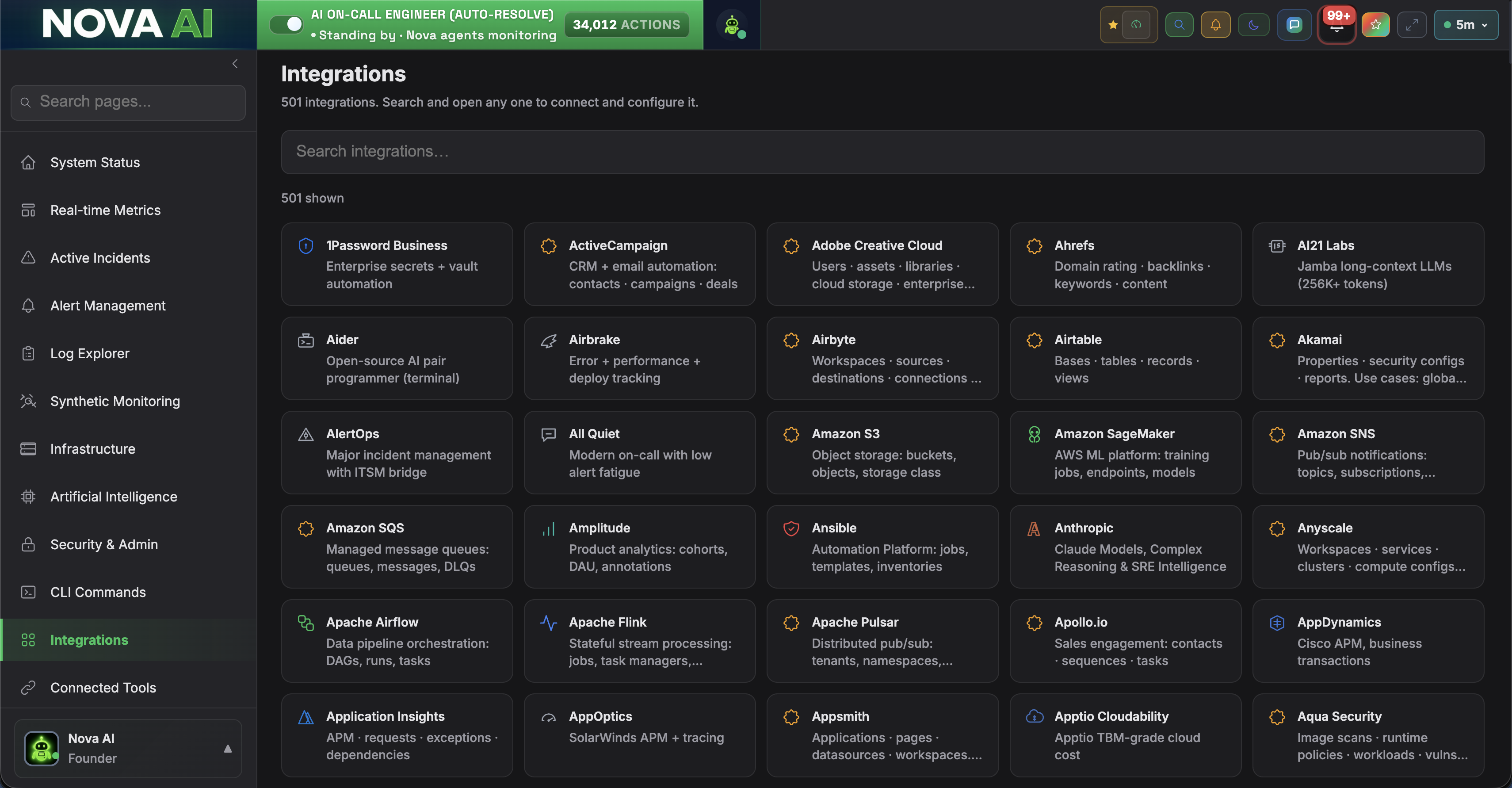
Incidents fixed
while you sleep.
Nova is the AI-native operating system for your entire SRE & DevOps stack: observability, incident response, on-call, security, and 500+ integrations, with 100+ AI agents that detect, investigate, and resolve while you stay in control. One platform. One login. One bill.
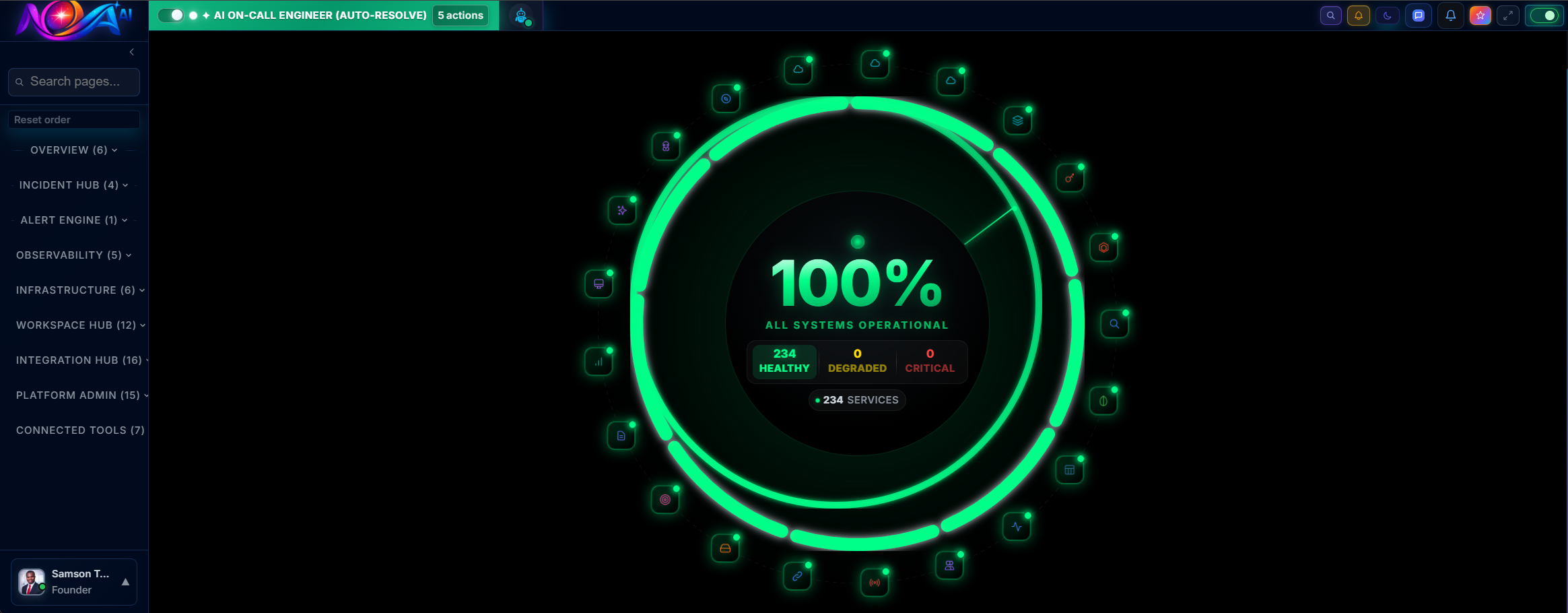
All Incidents.
Unified Signal.


100+ AI agents do the work.
You stay in control.
The fleet detects, investigates, and resolves incidents on its own. You choose what runs autonomously and what needs human approval. Every action is trust-scored, cost-tracked, and logged with a full audit trail.
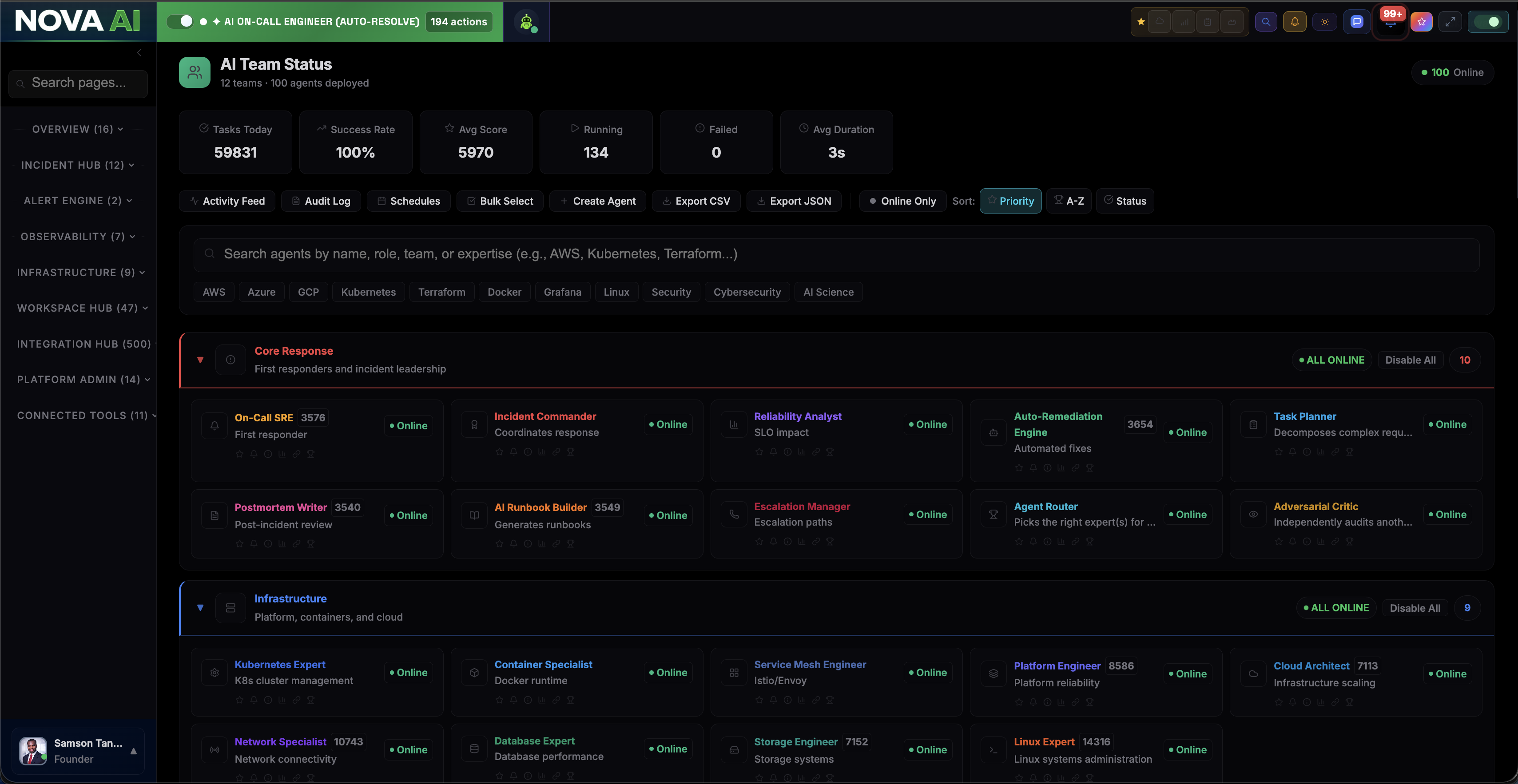
The Agent Ledger.
Trust scores, in real time.
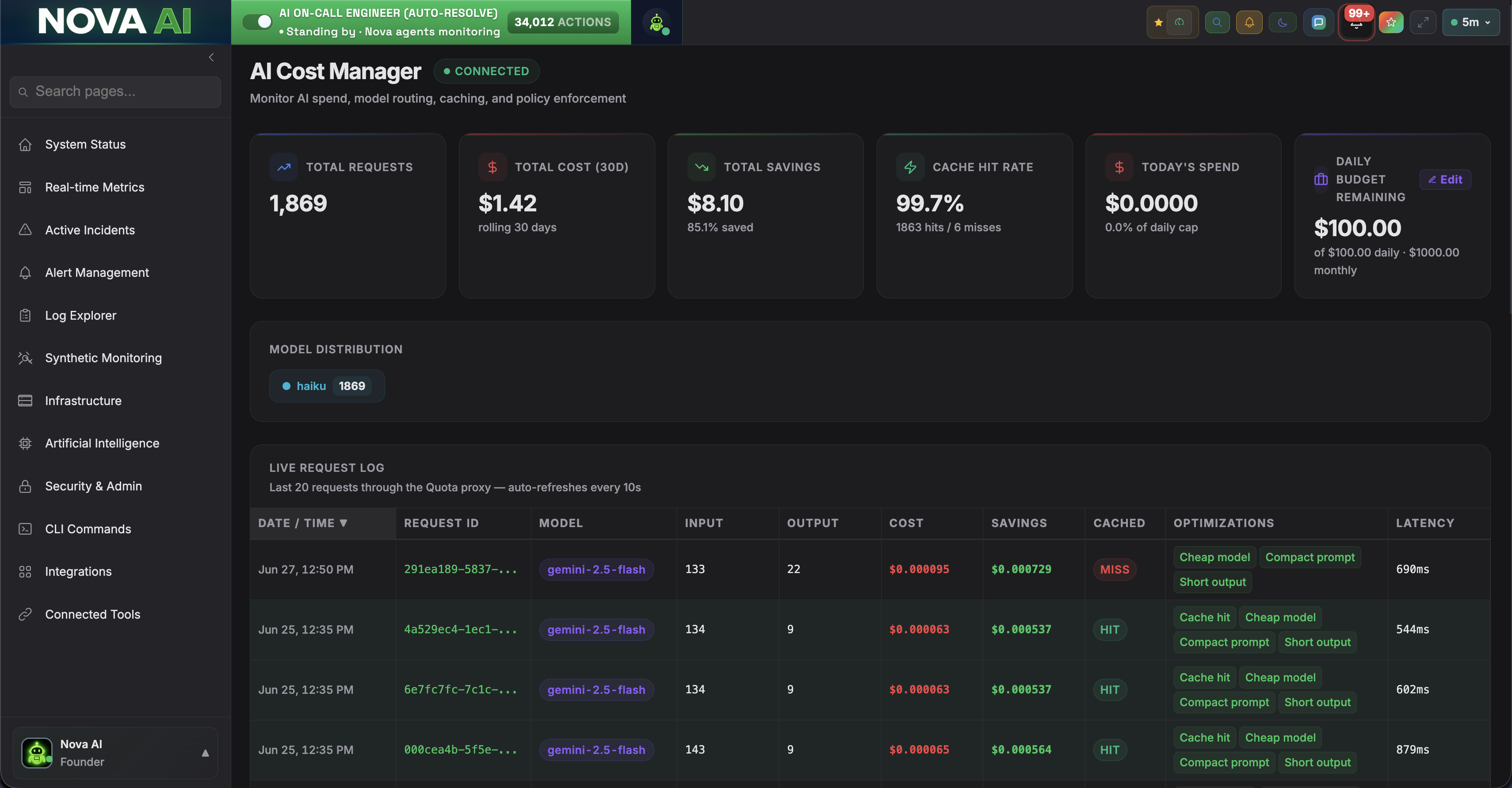
Live trust scores, performance, and decision history for every agent, so you always know which ones have earned their autonomy.
AI Cost Manager.Spend, routing, caching, tracked.
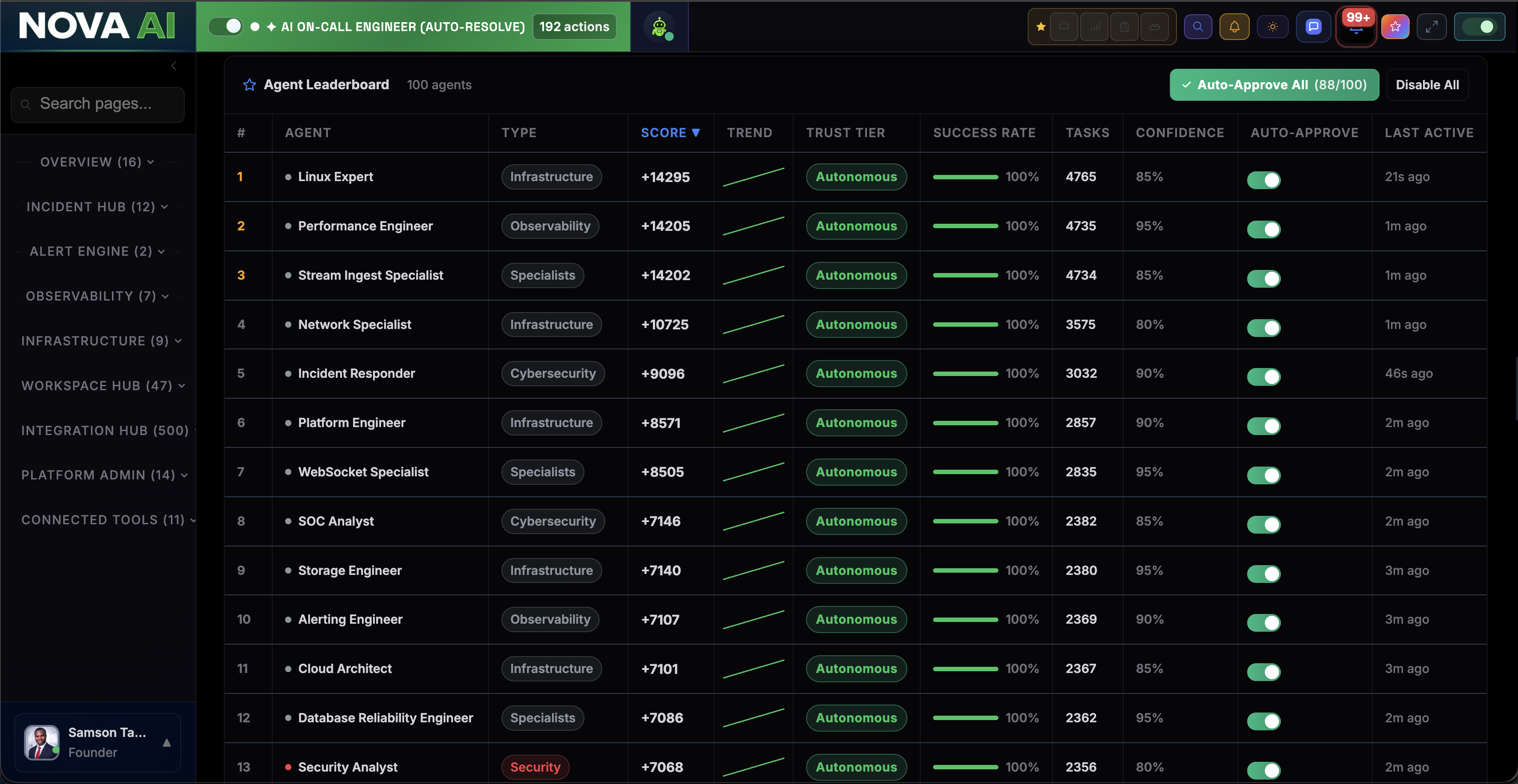
Track AI spend, model routing, and cache savings in one dashboard, with every call logged down to tokens, cost, and latency.
AI agents at work.
Every action, in real time.
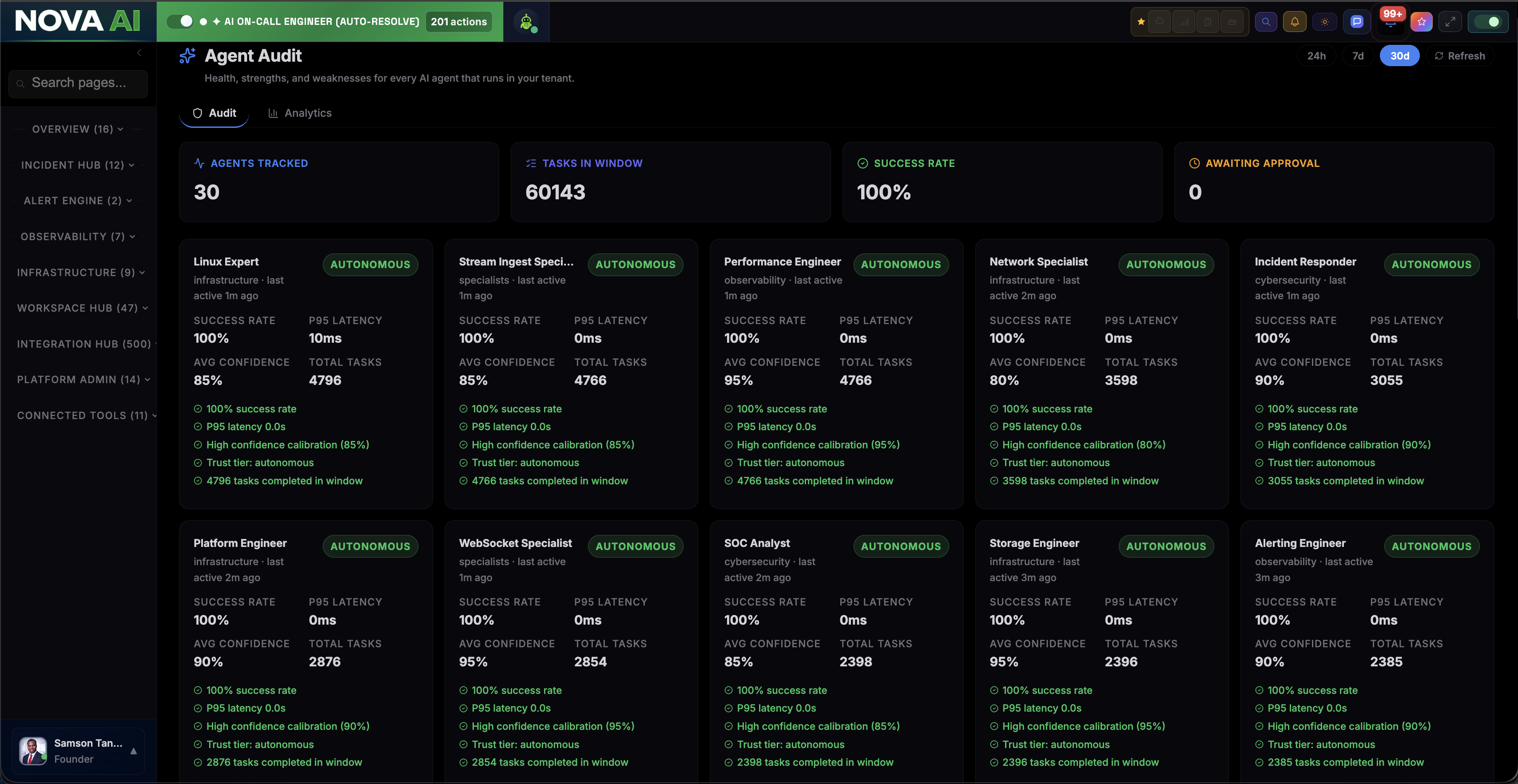
Agents triage incidents, run remediations, and close out postmortems on their own, every action logged with its confidence and outcome.
Nova Shell.
The shell of the Agentic OS.
A browser terminal with SSH-grade access to any connected host, every keystroke audited, and an AI agent ready to turn intent into commands.
140+ CLIs.
One governed console.
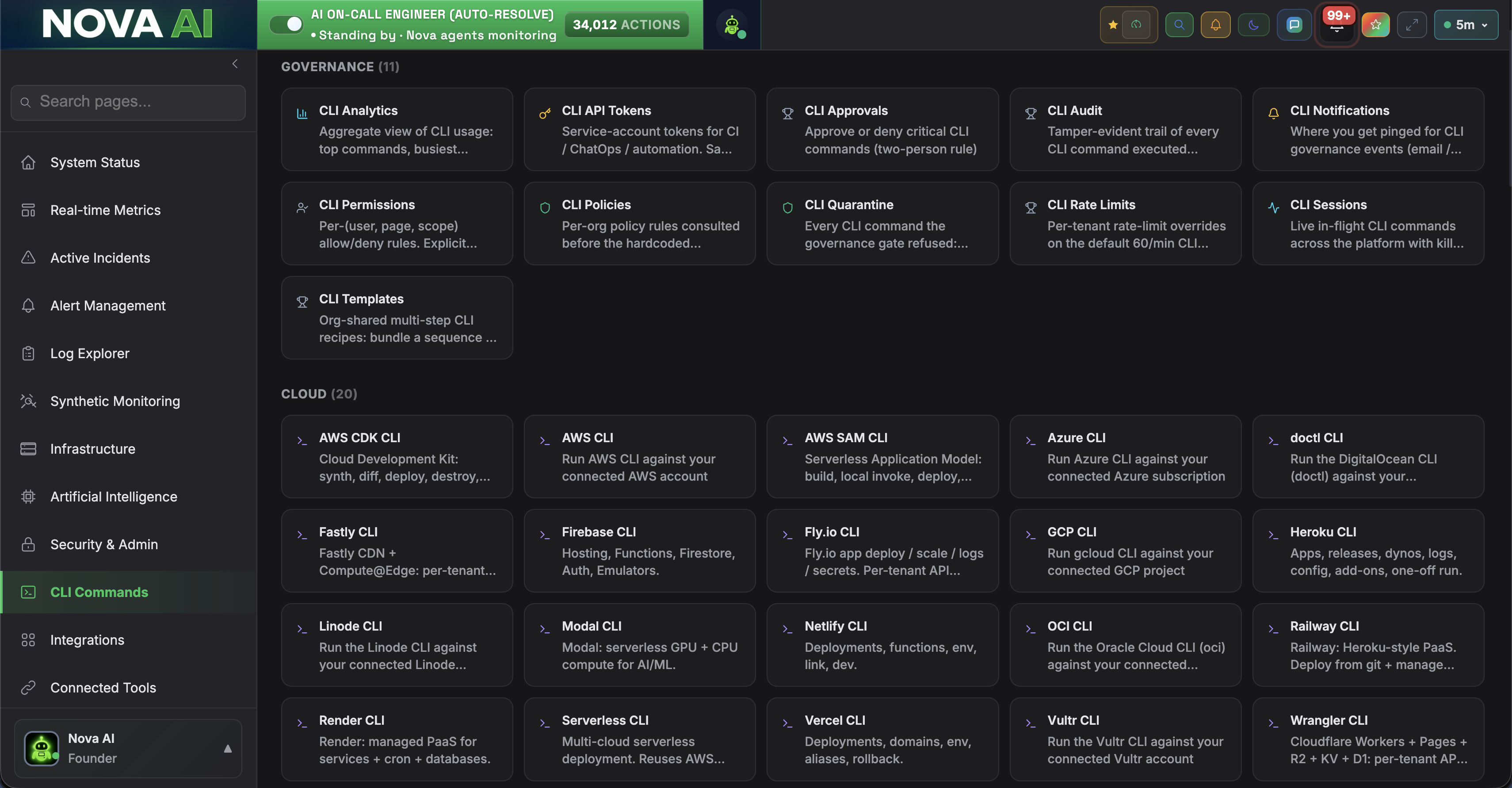
Run aws, gcloud, kubectl, helm, terraform, and more from your browser, every command clearing approvals, policy checks, and an audit trail.
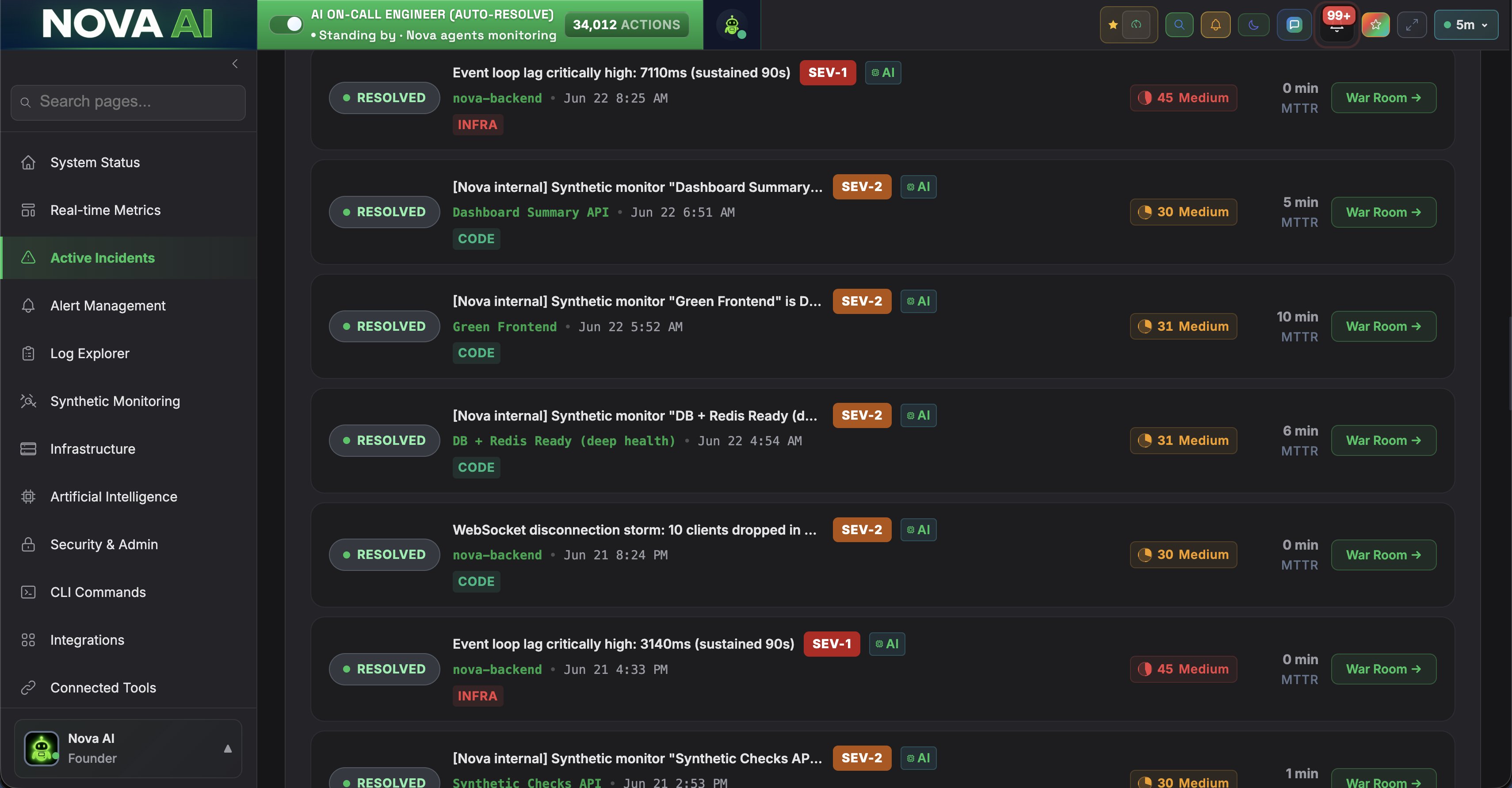
500+ Integrations.
Connect everything you run.
Connect cloud providers, observability stacks, CI/CD, databases, and security scanners in a click, then manage them all from one console.